
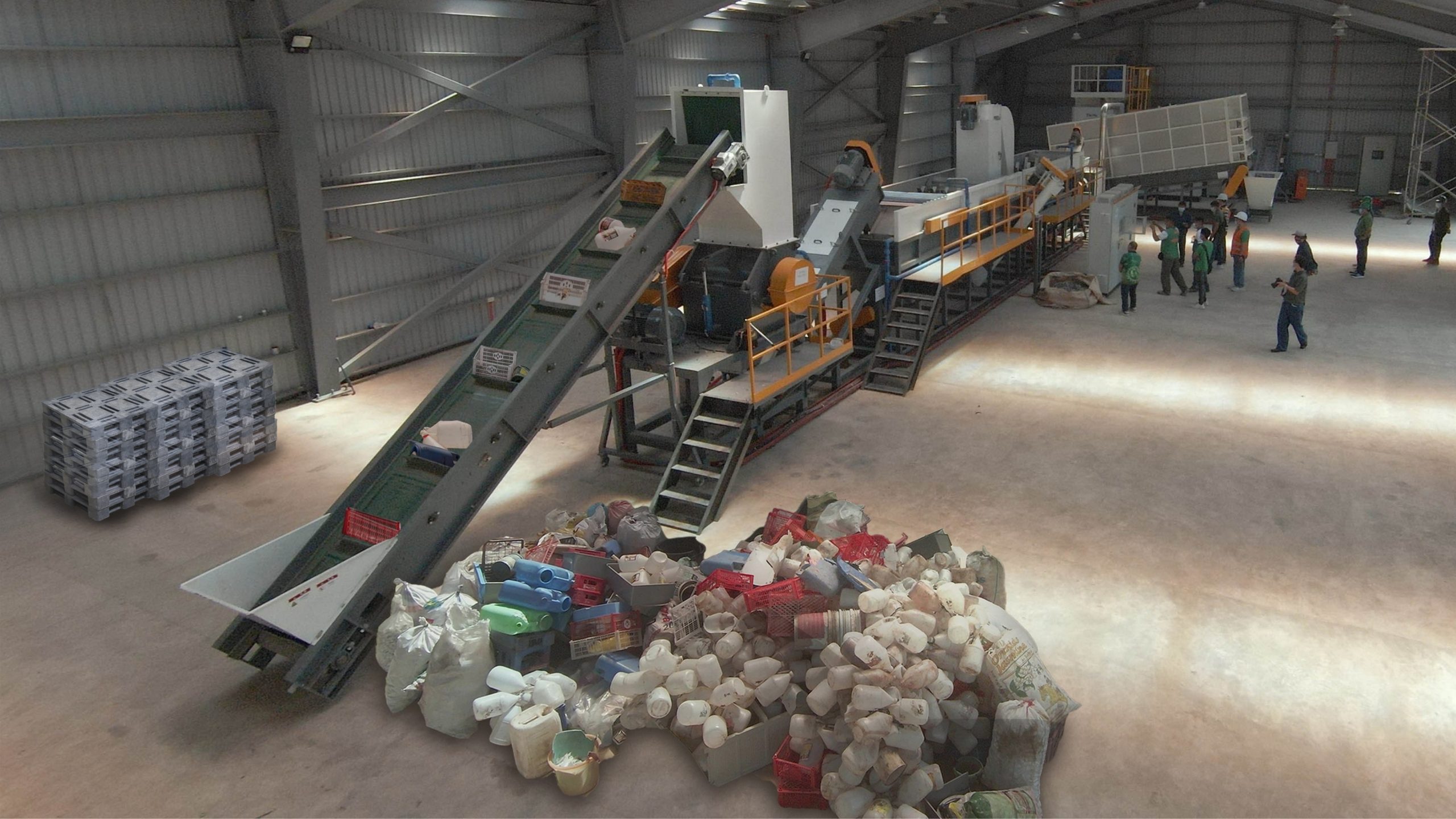
The Isabela Pallet Manufacturing Facility: Keeping Plastic Out of Landfills
From homes to streets to landfills, plastic waste has become one of today’s biggest environmental challenges. But in Isabela, discarded plastics are being repurposed into something valuable for the province’s agricultural industry.
The Provincial Government of Isabela (PGI) is pioneering a circular economy initiative that transforms piles of plastic waste into durable industrial pallets through a manufacturing facility located within the Isabela Provincial Capitol Complex in the City of Ilagan.
Governor Rodito T. Albano and Vice Governor Kiko A. Dy pushed for the project to address the growing problem of plastic waste accumulating in landfills while also meeting the logistical demands of Isabela’s agricultural industry through the production of durable, sustainable pallets.
As the country’s top corn producer, second-largest rice producer, and leading province in rice surplus, industrial pallets play a key role in warehouses, rice mills, and agricultural facilities, including the PGI’s Rice Processing Complex in Ipil, Echague, where they are used to support, stack, and store heavy sacks of rice and corn.
What Goes In, What Stays Out
High-Density Polyethylene (Plastic #2) and Polypropylene (Plastic #5), valued for their durability and reusability, are the primary plastics used in the facility. Accepted materials include shampoo bottles, detergent containers, bottle caps, oil containers, six-pack rings and wrappers, food containers, large yogurt containers, broken plastic storage boxes, and household basins.
After collection, the plastics undergo crushing, washing, rinsing, dewatering, melting, and dosing before being molded into pallets.
In contrast, Polyethylene Terephthalate (PET) bottles (Plastic #1), such as water bottles, and Polyvinyl Chloride (PVC) are excluded to maintain product quality. These materials have different melting properties and may contain contaminants that can affect the strength, consistency, and durability of the final pallets.
Building the Supply Network
Plastic waste is sourced through partnerships and coordination with local government units (LGUs) and junkshops. The municipalities of San Mateo, Echague, and Jones were among the first to supply collected plastics from their material recovery facilities and sanitary landfills.
To encourage proper segregation, unsorted plastics are purchased at ₱12 to ₱15 per kilogram, while properly sorted materials can fetch up to ₱30 per kilogram.
According to Environment and Natural Resources Officer (ENRO) For. Geronimo P. Cabaccan Jr., the province may soon source materials from neighboring provinces as demand increases.
ENRO added that private sector partnerships are also emerging, with pharmaceutical companies beginning to coordinate with the province to donate their plastic waste.
Environmental Safeguards
The process is designed with environmental safeguards. Wastewater generated during operations is filtered and recycled to prevent contamination of nearby surroundings, an approach strongly advocated by Governor Rodito.
The province is also securing the necessary environmental clearances and operational permits, including the Certificate of Non-Coverage (CNC), as the facility requires only around 1,000 tons of plastic materials annually.
Practically Built to Last
According to facility manager Jenieson E. Yu, the recycled pallets can last for 10 years or more under normal conditions, provided they are not constantly exposed to direct sunlight.
As production increases, the provincial government also sees strong market potential for the pallets, particularly among private warehouses and storage facilities that require durable material-handling equipment.
Governor Rodito said LGUs may use the facility through a cost-sharing arrangement, where production expenses are shouldered by the requesting LGU, and ownership of the finished pallets goes to them.
As the first facility of its kind in the region, the pallet facility shows how Isabela is ahead of others in turning plastic waste into something useful that helps keep the agriculture sector running. So instead of throwing away your shampoo bottles, detergent containers, or bottle caps, keep them out of landfills and bring them to Isabela’s recycling facility, where plastic waste is being transformed into a solution that helps power agriculture. – Isabela PIO