
Isabela ramps up climate action thru adaptation, disaster resilience training
To confront escalating climate and disaster risks, the Provincial Government of Isabela (PGI) held its 1st Isabela Provincial Training-Workshop Series on Climate Change Adaptation and Disaster Resilience, bringing together national agencies, scientific institutions, and local government units in a coordinated, action-driven effort.
Held in March and April 2026 in Quezon City, the four-batch program equipped participants with tools for science-based planning, anticipatory action, and climate finance mobilization, strengthening the integration of climate change adaptation and mitigation, as well as disaster risk reduction and management, into local development plans.
The series was conducted in partnership with Local Climate Change Adaptation for Development Inc. (LCCAD) and the University of the Philippines (UP) Resilience Institute–NOAH Center, along with other government agencies, marking a shift from reactive disaster response to proactive, whole-of-government, and whole-of-society preparedness.
Mahar Lagmay, Executive Director of the UP Resilience Institute, demonstrated how local governments can harness hazard maps and analytics from the UP NOAH Center to guide land use and disaster planning.
Dennis de la Torre, also from the same institute, presented on climate financing, highlighting the climate finance architecture as a system of specialized public funds designed to help countries effectively implement climate mitigation and adaptation projects.
Meanwhile, Director Al Orolfo of the Department of Environment and Natural Resources (DENR) highlighted pathways for local government units (LGUs) to access environmental and climate financing, addressing a critical gap in local adaptation efforts.
From the national policy front, Jerome Ilagan of the Climate Change Commission (CCC) underscored the Commission’s mandate to align local plans with the country’s Nationally Determined Contributions (NDC) and National Adaptation Plan (NAP), ensuring that grassroots actions directly contribute to national climate commitments.
William Sese of the Department of Economy, Planning and Development shared strategies to strengthen local government unit (LGU) capacity in disaster prevention and preparedness, including the implementation of protocols, operationalization of sectoral initiatives at the local level, and enhancement of climate risk data and information systems.
Scientific agencies also delivered stark warnings. The Philippine Atmospheric, Geophysical and Astronomical Services Administration (PAGASA) reported that dry spell conditions in Isabela are expected to persist through the second quarter, with dangerous heat index levels forecast in areas such as Echague.
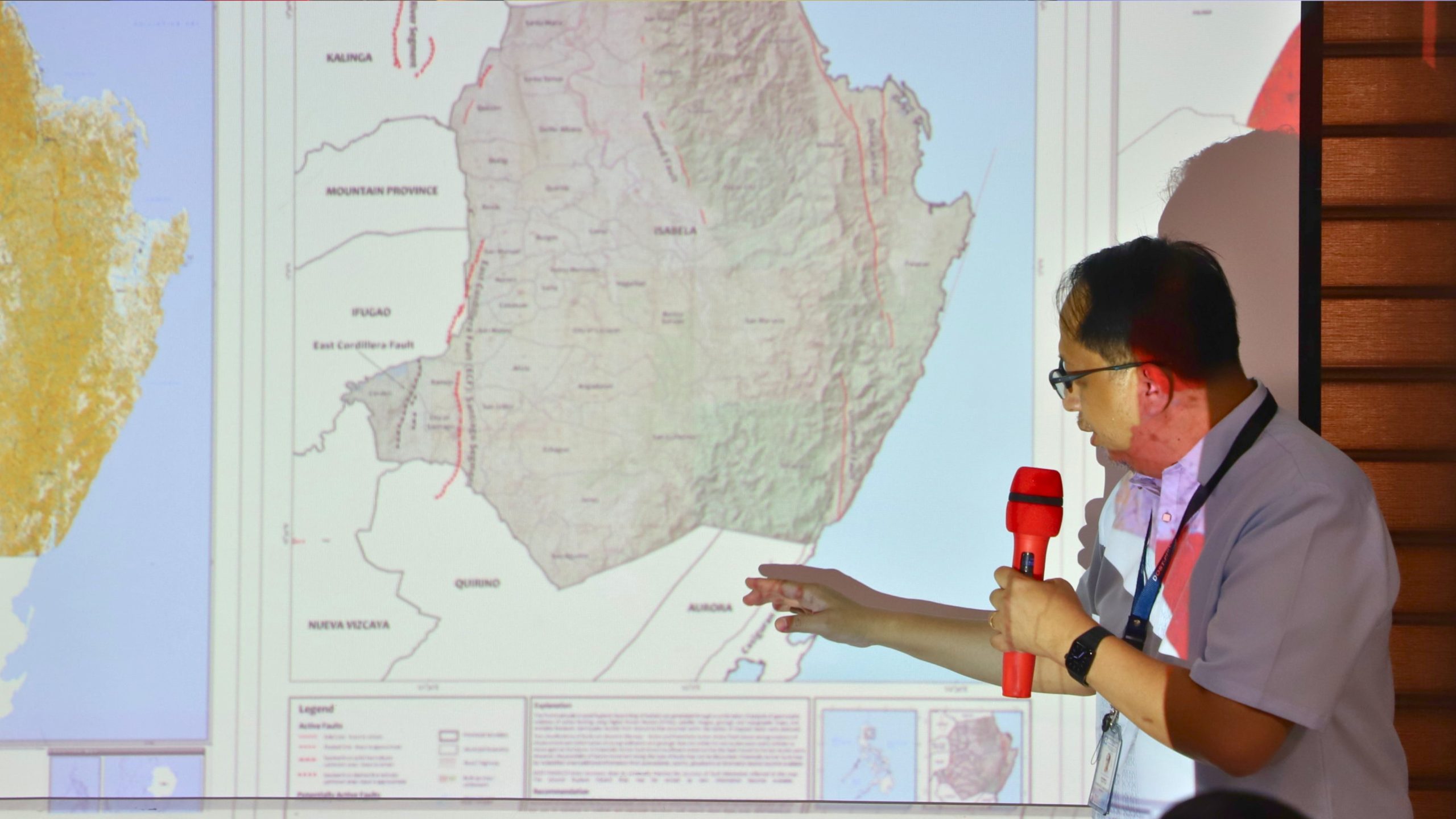
On geohazards, Director Teresito Bacolcol of the Philippine Institute of Volcanology and Seismology (PHIVOLCS) presented a comprehensive assessment of seismic risks in Isabela Province, emphasizing the need for stronger structural integrity, improved earthquake readiness, and enhanced community-level preparedness.
Beyond the training series, LCCAD Executive Director Nong C. Rangasa outlined plans in partnership with the province of Isabela to pilot a Bio-Circular Green and Blue Economy (BCGBE), strengthen MSMEs through innovation and digitalization, establish CRIISPII at Isabela State University, and advance climate and development financing, as well as international cooperation for resilient local development.
The training also spotlighted innovation, as Lyzelle Dagum, Managing Director of Jimzel Software, introduced digital solutions designed to help local government units operationalize climate data and improve response coordination. – Isabela PIO